Agentic Workflows in Enterprise BPM: A Practical Guide with n8n and LLMs
Agentic systems can now orchestrate multi-step enterprise processes autonomously. Here's how we're combining n8n orchestration with frontier LLMs to build workflows that actually run in regulated environments.
Agentic AI is one of the most overloaded terms in enterprise technology right now. Every vendor has an 'agentic' offering. Most of them are chatbots with a tool call. A genuine agentic system does something different: it takes a goal, reasons over available tools and context, and executes a multi-step plan to completion — without a human in the loop on every decision.
What Makes a Workflow Genuinely Agentic
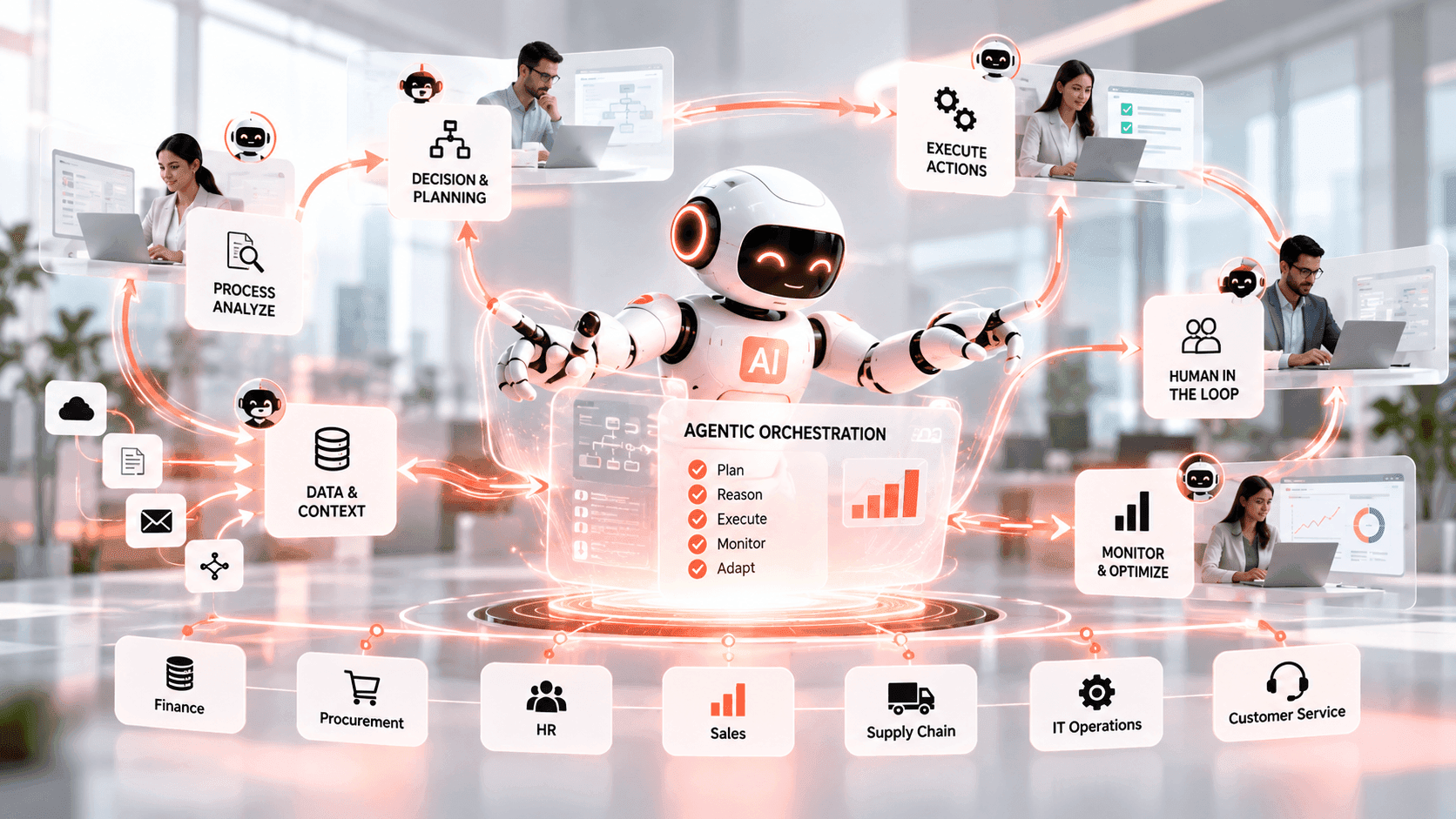
The distinction matters because the engineering requirements are completely different. A chatbot needs a language model and a chat interface. An agentic workflow needs a reasoning layer, a reliable tool execution environment, state management across steps, error recovery, and a decision point for when to escalate to a human. n8n, when combined with a frontier LLM as the reasoning layer, gives you all of this in a deployable package.
The n8n + LLM Architecture Pattern
Our production pattern is consistent: n8n handles orchestration and tool execution — API calls, database reads/writes, file operations, conditional branching. The LLM handles reasoning — it receives context, decides which tool to invoke next, and interprets the results. The agent loop runs inside an n8n workflow, with each iteration calling the LLM with an updated context window that includes tool outputs from the previous step.
Handling Regulated Environments
The hardest part of deploying agentic systems in enterprise BPM isn't the AI — it's the compliance requirements. Every action needs an audit trail. Certain decisions need a human override. Data processed by the agent can't leave specific geographic boundaries. We address this by building audit logging directly into the n8n workflow (every tool call, every LLM response, every decision point is logged), implementing configurable human-in-the-loop checkpoints for high-stakes decisions, and routing LLM calls through enterprise-approved API gateways.
Where Agentic Workflows Add the Most Value
The highest-value use cases we've deployed are all variations on the same pattern: a complex, multi-step process that currently requires a human to coordinate between multiple systems and make judgment calls along the way. Claims triage, customer onboarding, procurement approvals, compliance reviews — all of these involve reading documents, querying systems, applying rules, and producing structured outputs. Agents handle all of this autonomously, with humans reviewing exceptions rather than processing everything.
Key Takeaways
- Genuine agentic systems reason over tools and execute multi-step plans without per-step human input
- n8n handles orchestration; the LLM handles reasoning — keep the responsibilities separate
- Audit logging must be built into every action, not added later
- Human-in-the-loop checkpoints are required for high-stakes decisions in regulated environments
- The best use cases replace multi-system coordination tasks, not simple lookups