
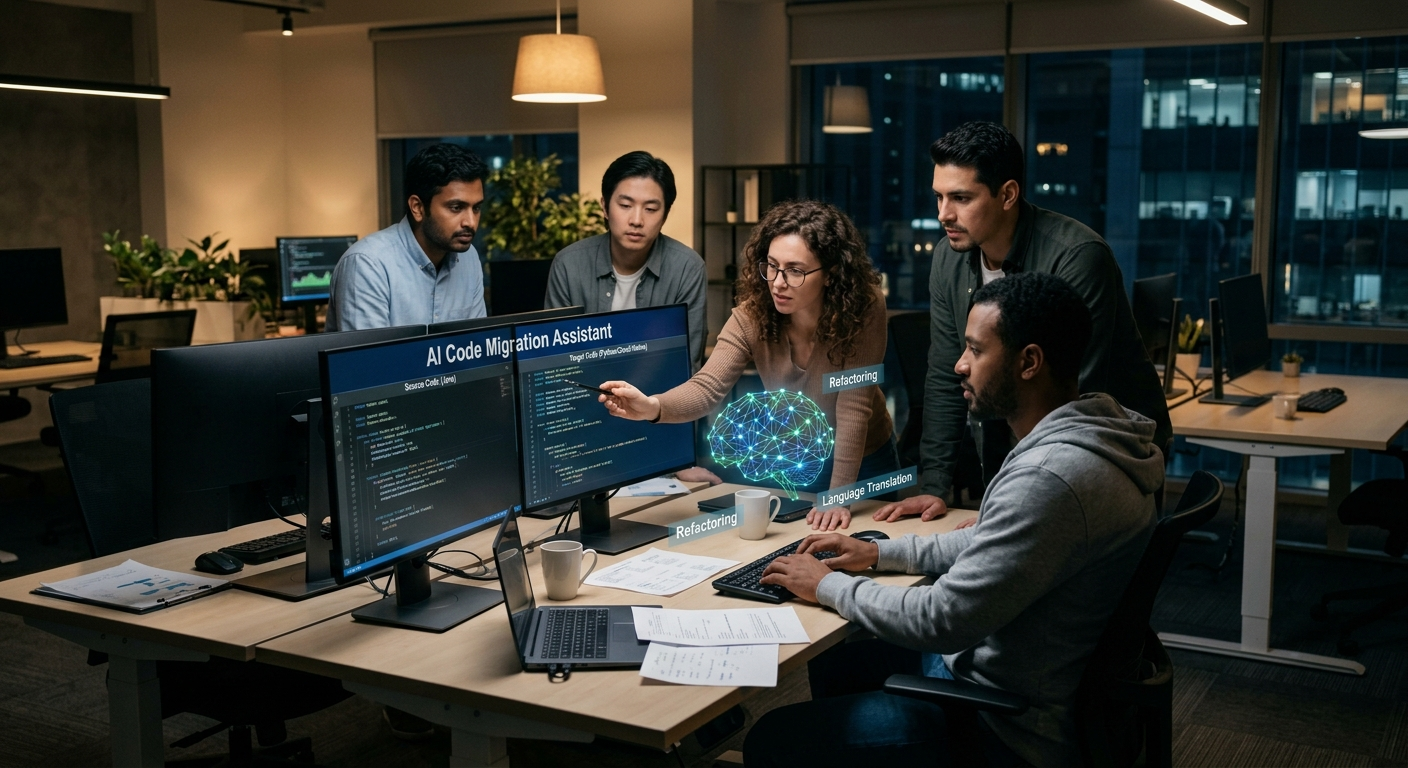
An AI-assisted modernisation approach was implemented to transform legacy applications into cloud-ready, scalable systems. Rather than following a purely conventional migration path, the initiative focused on reducing migration timelines, improving code quality, and enabling a smoother transition from outdated technologies to modern frameworks, combining intelligent automation with practical, AI-supported engineering workflows.
Challenges Identified:
- High Technical Debt: Legacy systems contained deeply embedded and largely undocumented business logic, making migration a complex and error- prone undertaking that demanded careful handling at every step.
- Inefficient Manual Migration: Converting outdated technologies such as SOAP services and older frontend frameworks required considerable manual effort and time, slowing teams down and increasing the likelihood of inconsistencies.
- Version Compatibility Challenges: Upgrading across multiple technology stacks introduced compatibility gaps and raised the risk of functional inconsistencies that were difficult to catch early in the process.
- Extended Delivery Timelines: Traditional migration approaches often resulted in prolonged project durations, putting pressure on broader digital transformation goals and stakeholder timelines.
Solution Features:
The modernisation process was powered by Anthropic’s Claude Opus 4.6, accessed through GitHub Copilot, with Model Context Protocol (MCP) integrations connecting Jira, GitHub, and Confluence — giving the model direct, contextual access to project requirements, source code, and documentation. This AI-assisted foundation streamlined migration across multiple technology stacks:
- AI-Driven Code Analysis and Transformation: Legacy codebases were analysed using AI models to understand their structure, dependencies, and embedded business logic — enabling more accurate and automated refactoring into modern architectures.
- .NET Framework to .NET Core Migration: Applications were transitioned to .NET Core 8, including automated conversion of configuration files, restructuring of project architecture, and modernisation of dependency injection patterns.
- SOAP to REST API Transformation: Legacy SOAP services were converted into Java Spring Boot-based REST APIs by processing WSDL and XSD files, enabling more efficient and lightweight JSON-based communication.
- Frontend Modernisation: Older Angular versions were upgraded to the latest standards by identifying deprecated components and refactoring them into modern, optimised structures that are easier to maintain going forward.
- Automated Validation and Testing: AI-assisted validation workflows ensured functional consistency between legacy and modernised systems through automated test generation, reducing the risk of behavioural gaps slipping through unnoticed.
Advantages:
- Accelerated Migration: AI-assisted workflows significantly reduced the time required for modernisation compared to traditional approaches, helping teams reach outcomes faster.
- Improved Code Quality: Automated refactoring produced cleaner, more standardised codebases that are noticeably easier to maintain and build upon.
- Functional Consistency: Validation mechanisms ensured that modernised applications continued to behave in line with the original system, an important safeguard when business-critical logic is involved.
- Scalable Architecture: The transition to microservices and modern frameworks enabled better performance and positioned systems for long-term scalability.
Conclusion:
The use of AI-assisted engineering in legacy modernisation shows how intelligent automation can take the complexity out of what has traditionally been one of the more demanding challenges in software delivery. By transforming legacy systems into modern, scalable architectures, the solution enables faster delivery, improved system reliability, and long-term maintainability. Bringing AI into engineering workflows supports efficient modernisation while ensuring systems stay aligned with current technology standards and remain ready for whatever business needs come next.